One LAN owns
the whole building.
Terminals at every door, records on your server, credentials in the pocket of the matching engine — the access+time stack gives a building one identity graph without a subscription in sight.
Building the node set
Door audit
Count doors, tiers and visitors: lobby, offices, plant, warehouse — each gets a node class.
Credential plan
Face for throughput doors, fingerprint for sensitive doors, card for ramp-up visitor flows.
Network map
TCP/IP + RS485 topology, one controller per door class, the 12 V 5 A rail fed from the cabinet.
Enrollment run
One campaign enrolls all users over LAN via the free SDK; shift starts on schedule.
The uplink is for records, not for identity.
Every terminal matches its own templates in 0.3 s; the network carries events upward. A broken cable shows up in the reports as a pause, never as a door that forgets its second tenant.
- Offline-safe — local verification continues; events queue and burst-sync on reconnect.
- Credential classes — face (5,000–50,000 tiers), fingerprint (1,000–1,600), card (100K+); voice-class add-ons configured per SKU — confirm platform status on the datasheet.
- Zero license math — one SDK, no per-node fee, no per-user seat; the integrator prices the hardware, not the entitlements.
Node-set component table
| Position | Recommended class | Role | Key values |
|---|---|---|---|
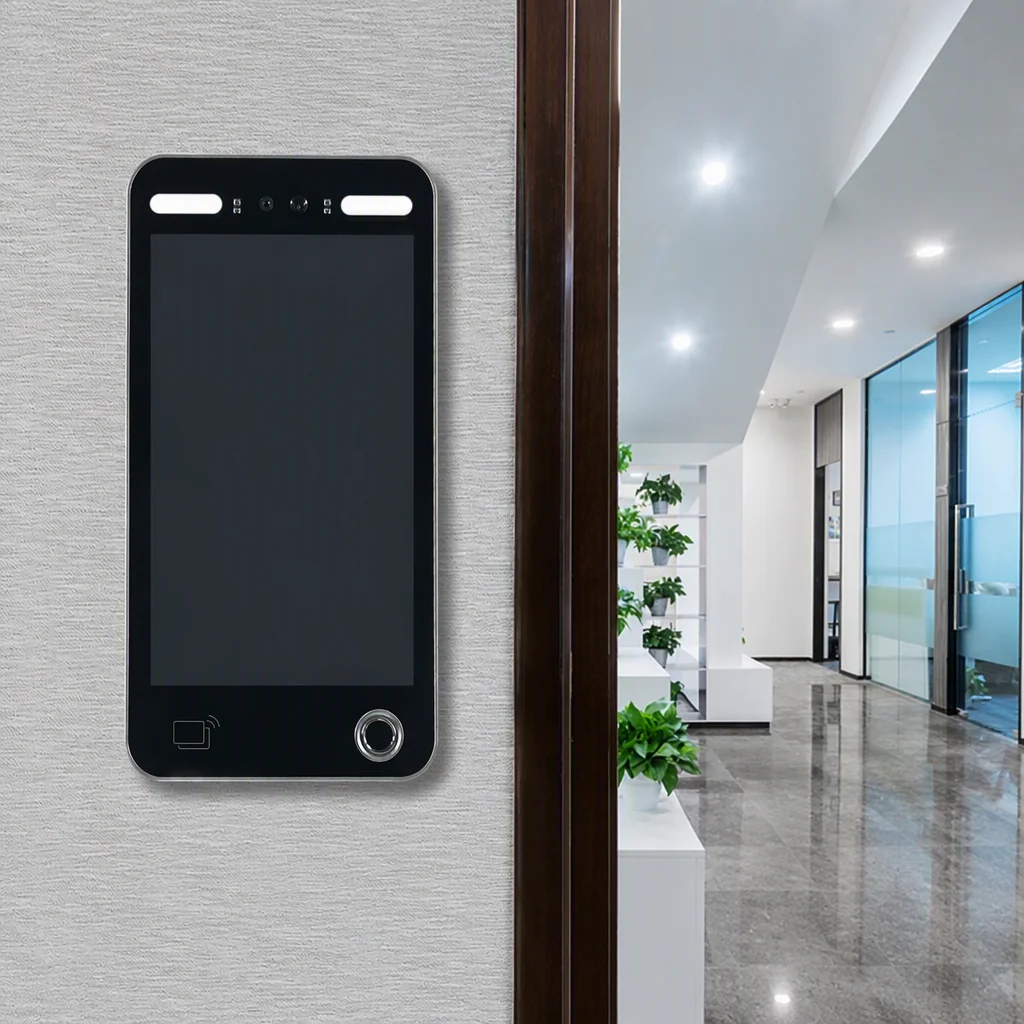
| Lobby door | TM-Ai18E / TM-Ai20 | Face throughput door with QR visitor support | 8-in screen · 5,000-user tier · 0.3 s · QR |
| Sensitive door | TM-F610 / TM-F850 | Face + fingerprint dual-credential | 0.3 s · 1,000–1,600 templates · TCP/IP |
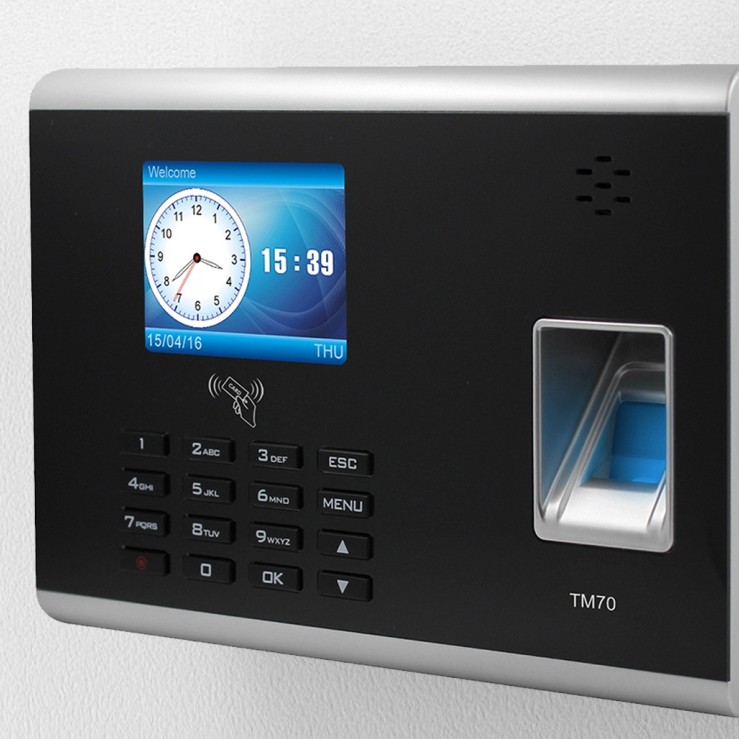
| Standard gate | TM60 / TM70 | Network fingerprint clock | 1,600-template class · TCP/IP + RS485 |
| Controller | TM-SS01 / TM-SS04 | Door decision and event storage | 10,000 users / 50,000 records |
| Power rail | TM-JX | Cabinet supply | 12 V 5 A · controller + lock load |
| Uplink | LAN / customer server | Record receiver + admin console | Free SDK export formats |
A three-door office may run on two controllers and one rail; a campus repeats the block. Door counts scale the stack linearly — the firmware does not change.
Three nodes of the block
Throughput node
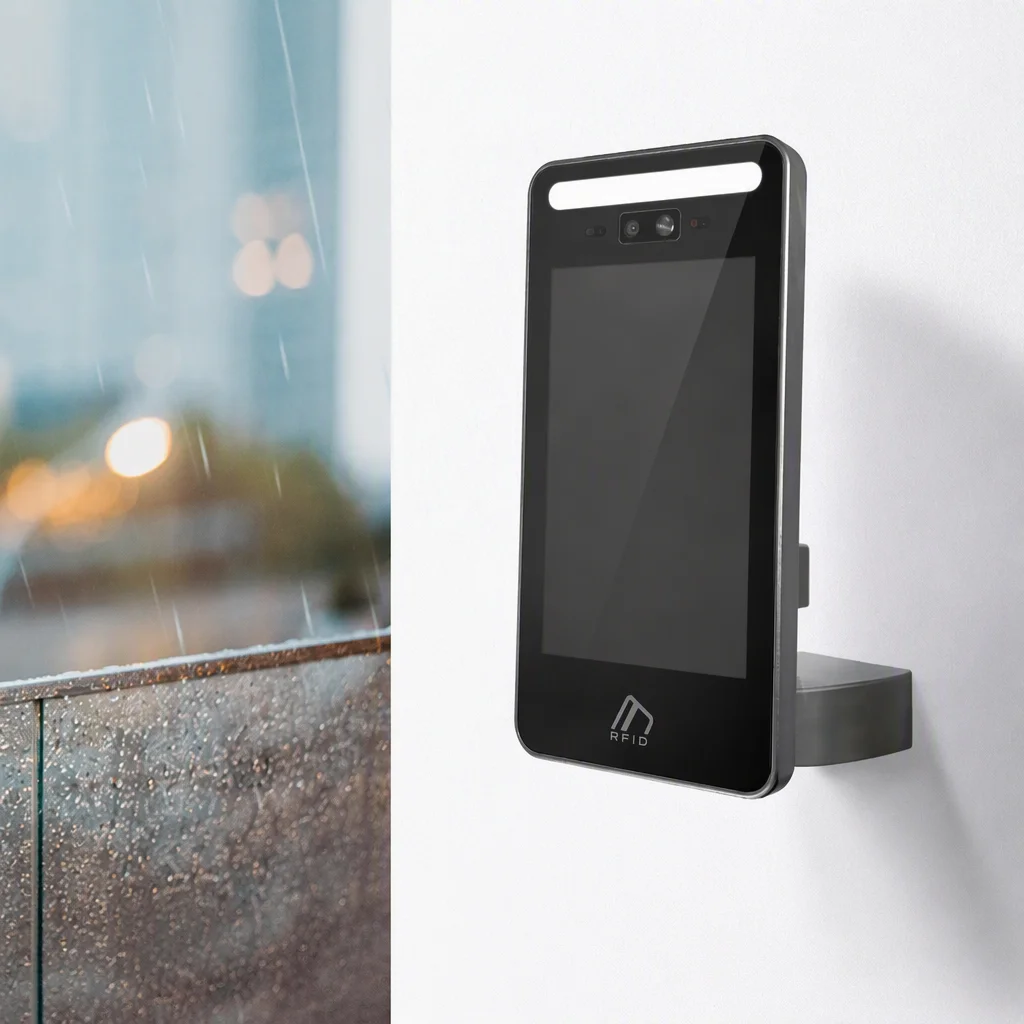
Face terminals at 0.3 s — the 62% majority choice of 2025's new installs.
Verification node
Fingerprint 1:1 template-local units that put a person, not a badge, on the record.
Decision node
TM-SS controllers holding 10,000 users and 50,000 events on-site.
Access & time FAQs
Face and fingerprint are the core classes; card tiers scale to 100K+; voice-class credential support is configured per SKU and confirmed on the datasheet.
On your server — terminals report over TCP/IP to your own receiver; no third-party service is in the loop.
Matching stays local to each terminal, records queue, and the uplink burst-syncs when the LAN returns.
Demo the block on three doors.
One face terminal, one fingerprint unit and one controller — enough to sell the whole building.