We keep our customers
anonymous and their outcomes numbered.
Three recurring deployment patterns from three customer classes. Names are withheld by contract; the engineering — and its measurable effect — is not.
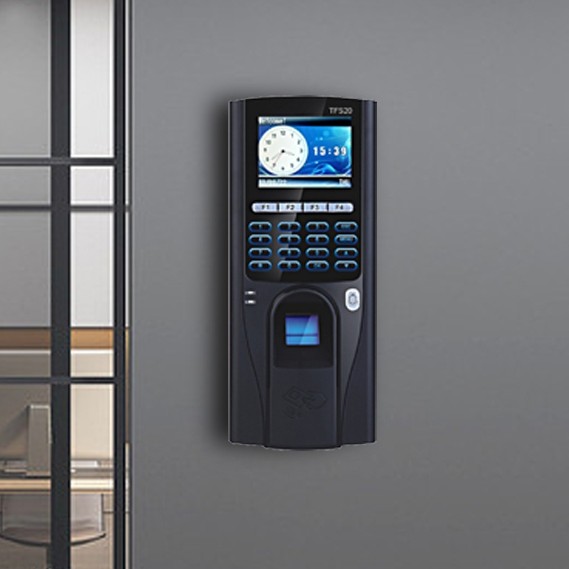
Thirty units, no cloud hostage.
A multi-shift operator needed attendance records its payroll system could audit directly. Dozens of terminals across two campuses, TCP/IP reporting into their own HR stack.
- Hardware — TM-series network units: fingerprint 1:1 template-local, plus card tiers; controllers at 10,000 users / 50,000 records over TCP/IP + RS485.
- Integration — free SDK gave the customer's integrator direct record export; no per-device license, no server subscription, no cloud dependency.
- Outcome — batch enrollment completed in two campaign days; late-arrival and shift-jump reports now generate from raw punch logs.
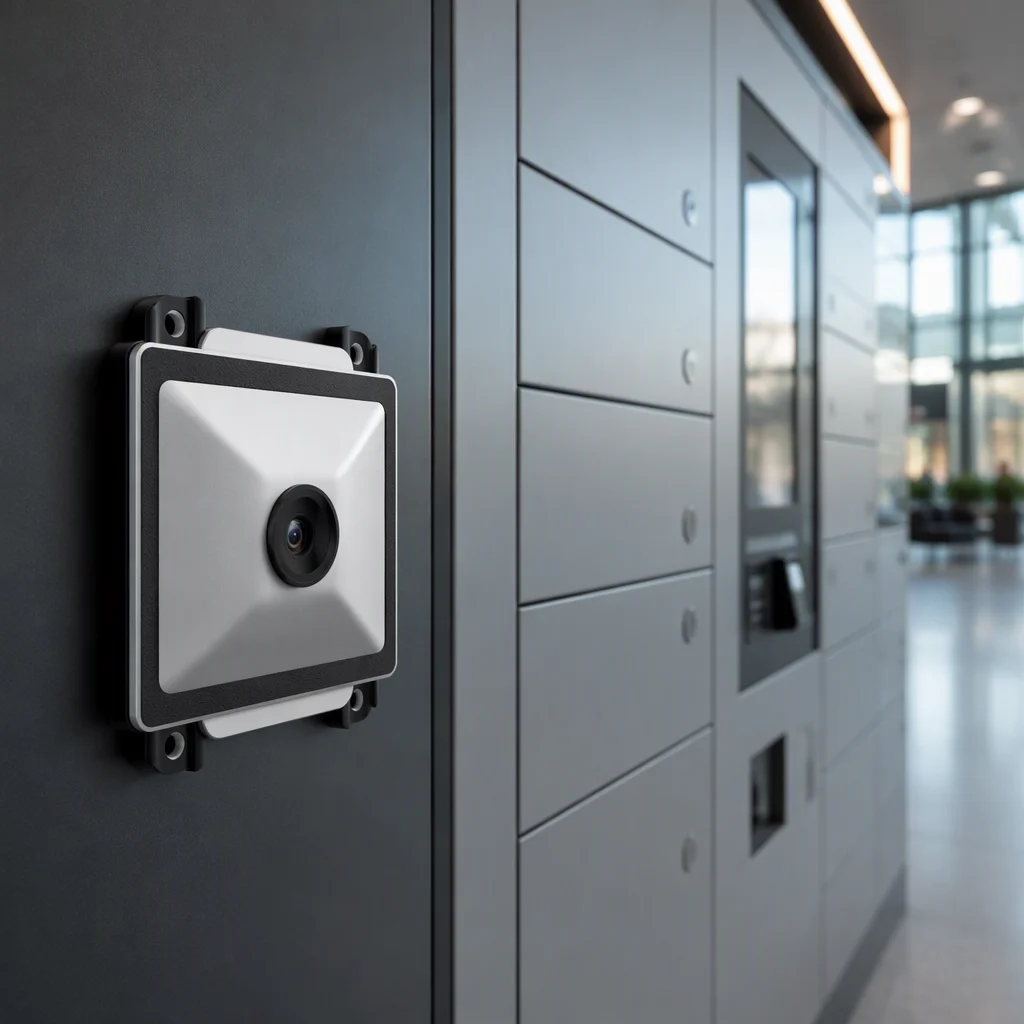
A kiosk that scans through the glass.
A kiosk builder needed 2D reading inside a locked optical channel: screen codes dimmed to 30% brightness, labels wedged under a curved glass lip — the two classic kill conditions of entry-level imagers.
- Hardware — fixed 2D engine class with 4 mil precision, global-shutter capture for motion tolerance; RS232 control bus into the panel board.
- Integration — window angle, illumination and decode triggering tuned over three drawing revisions; ≥95% decode on curved QR labels in the customer's own test.
- Outcome — release-to-ramp in under sixty days from sample approval, with 100% unit-level functional test at our factory.
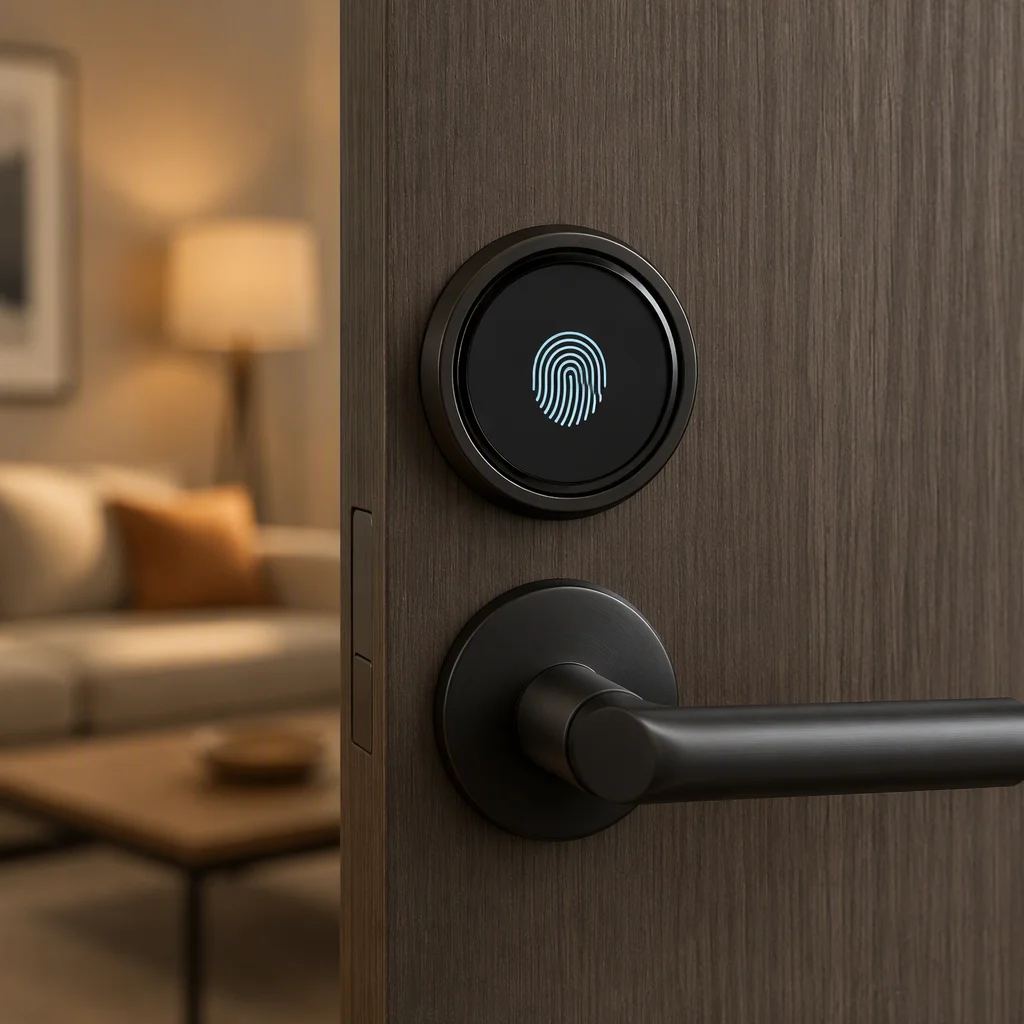
Battery locks, −40°C field test, zero redesign.
A door OEM's flagship moved from fingerprint to face-plus-display — and back to a fingerprint main door when a construction-spec project demanded true cold-rated behavior.
- Hardware — AM160-YYH362L low-power module for battery locks plus the 360° ⌀16 mm main SKU; both −40~85°C class, 1,000 templates, 0.3 s.
- Integration — one mechanical drawing set served both SKUs because the L-class module reuses the same ⌀16 mm fascia cut; firmware differences only.
- Outcome — the OEM stocked a single fascia for three lock models, cutting tooling cost and skew risk at the same stroke.
What customers repeat, in patterns
Working pattern: this customer class re-orders the same module annually, only changing firmware parameters per market variant. Fastest re-order after sample approval: three weeks, 5,000-unit class, no re-qualification round.
Pattern · Smart-lock OEM, volume purchaser
Working pattern: integration companies value that drawings and SDK arrive with the sample, and that an interface question gets an engineer's answer instead of a ticket reference. Repeat expectation: 48h reply, first try.
Pattern · Attendance integrator, multi-site client
Working pattern: kiosk and cabinet builders test against the two kill conditions first — curved screen codes and low brightness. When the engine passes those, the rest of the BOM is trivial to negotiate.
Pattern · Kiosk builder, embedded scan line
Your project becomes the fourth page.
Send the deployment brief — volumes, environment, interfaces — and receive the matched pattern plus a sample recommendation within 48h.