
Face Modules
The camera pair that tells a printed photo from a person — and the vein hybrid that keeps working when the mask does not. Face recognition took 54.6% of 19.8 M smart-lock modules in 2025; this line is how OEMs deliver it.
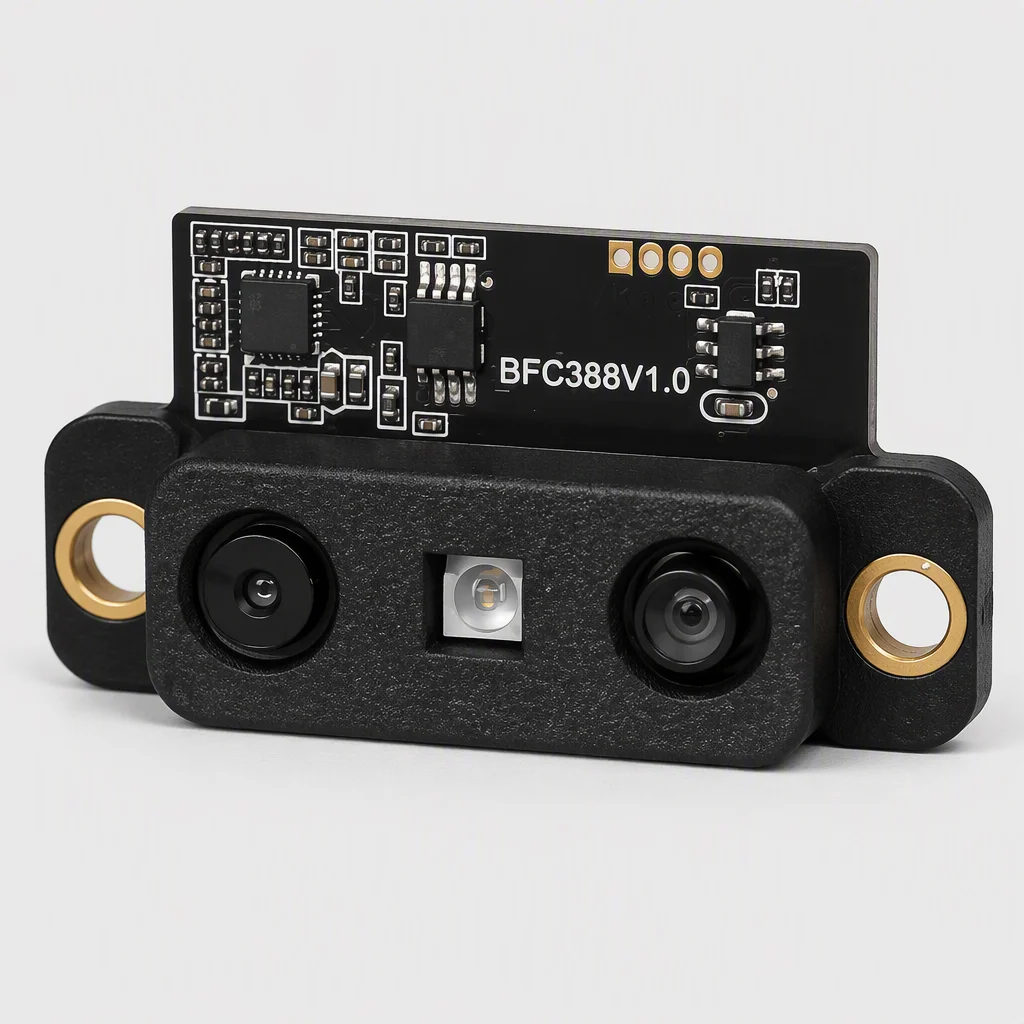
All 10 face module SKUs
| SKU | Positioning | Key values | Variant basis | Link |
|---|---|---|---|---|
| BFC388 | Dual-lens face module — reference platform | RGB+IR liveness · 0.3 s · ±20° class · USB2.0/UART | Platform reference | BFC388 → |
| BFC800 | 3D dual-cam, high-capacity class | 1280×720 dual cam · FAR <0.001% class · <0.3 s | BFC388 family performance member | BFC800 → |
| BFC350 | Compact dual-lens module | BFC family compact envelope · slim locks | Variant aligned to BFC388 platform | BFC350 → |
| BFC3A1 | Dual-lens variant for slim fascia | Narrow bezel fit · dual-cam · UART/USB | Variant aligned to BFC388 platform | BFC3A1 → |
| BFC3A2 | High-capacity dual-lens variant | Capacity-tuned · lock OEM class · dual-cam liveness | Variant aligned to BFC388 platform | BFC3A2 → |
| BFP3A2 | Face + palm-vein hybrid module | 1600×1200 sensor · 0.3–1.9 m · face + vein | Platform reference (vein) | BFP3A2 → |
| BFP388 | Face + vein module, family performer | Intercom class · face+vein fusion | Variant aligned to BFP3A2 platform | BFP388 → |
| BFP39H | Face + vein compact head unit | Apartment intercoms · doorbell head class | Variant aligned to BFP3A2 platform | BFP39H → |
| BFP3E2 | Face + vein slim-body variant | Slim intercom bodies · 0.3–1.9 m class | Variant aligned to BFP3A2 platform | BFP3E2 → |
| BFP35H | Face + vein housing-friendly variant | OEM intercom housing · vertical fit | Variant aligned to BFP3A2 platform | BFP35H → |
Variant alignment note: BFC-family variants sit on the BFC388 dual-lens platform; BFP-family variants on the BFP3A2 face+vein platform — same firmware tree, different envelopes. Where a figure is family-class, the model page says so.
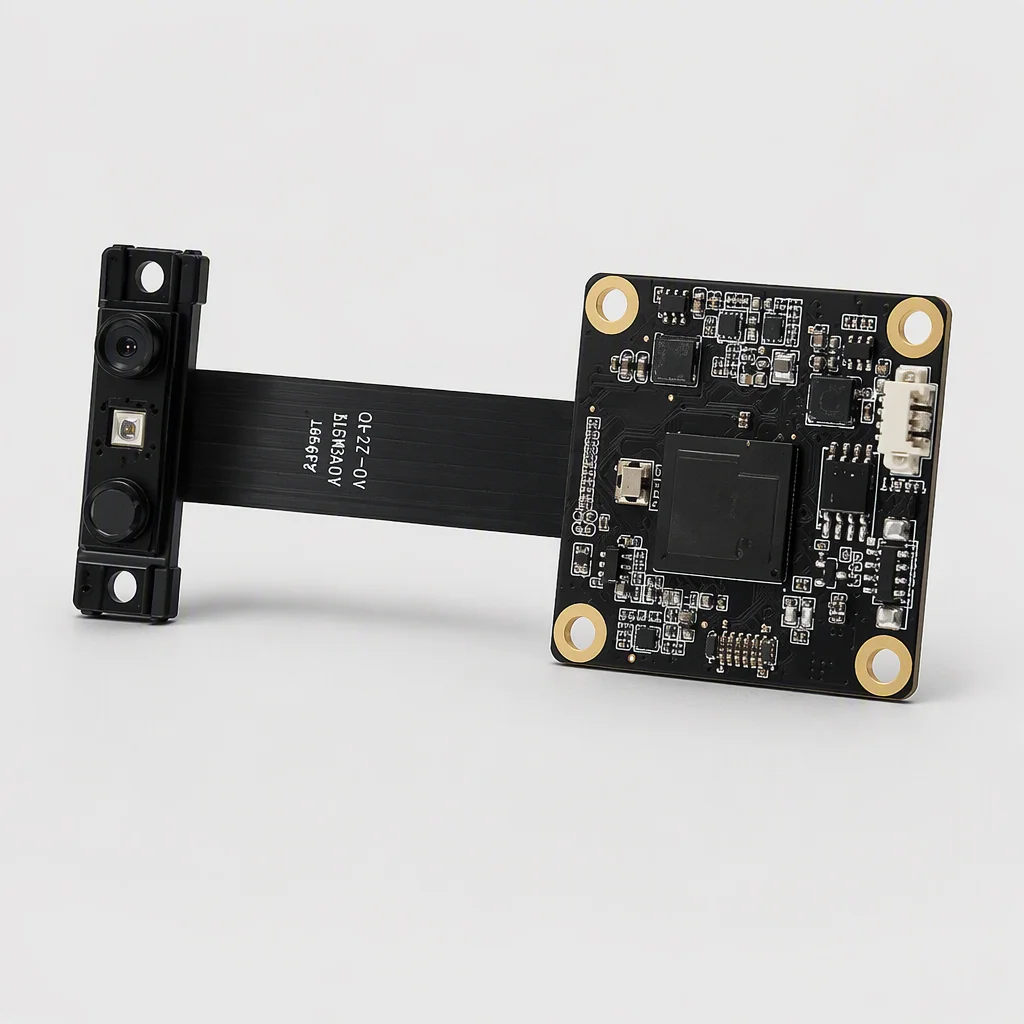
The stereo pair is the security model.
A single camera sees light; a pair sees depth. The RGB+IR baseline in the BFC series makes a print-out's flatness visible in the disparity map, and the liveness verdict is computed on-module — a sensor that can be fooled by a glued-on photo has no place on a door.
- 0.3 s pipeline — capture, liveness verdict and identification fit in the same window a person expects to walk through.
- 3D growth evidence — 3D-class modules grew +41% in 2025 (market reports); BFC800's 1280×720 pair is the top of our own ladder.
- Vein headroom — the BFP3A2 hybrid adds palm-vein matching at 0.3–1.9 m for intercoms where the face is the doorbell.
Designing a face module into a fascia
Use case
Lock, intercom or gate? Distance, height envelope and light plan first.
Camera layout
Stereo baseline and IR fill placement reviewed against your fascia drawing.
SDK demo
Free SDK: enrollment UI, liveness tuning, USB/UART host path.
Samples
1–3 days ship; dual and 3D modules in one sled for side-by-side bench runs.
Field pilot
Night doors, children, masks — parameter tuning on real enrollment data.
Mass production
10–25 days below 5,000 pcs; 100% unit liveness-verified before packing.
Face module FAQs
A printed photo is rejected by the stereo baseline of the RGB+IR pair, and the liveness verdict is made on-module — a compromised host cannot override it.
The module class is 30–120 cm; the face+palm-vein BFP3A2 platform extends the envelope to 0.3–1.9 m for intercom designs.
UART and USB 2.0 on the BFC series, with RS232-class paths on terminal platforms — SDK examples cover each variant.
Test the photo attack on a sample.
1 pc worth of BFC388 in 1–3 days — bring your best print-out, we bring the 0.3 s clock.